
TERRA magazine: Raiz ('roots')
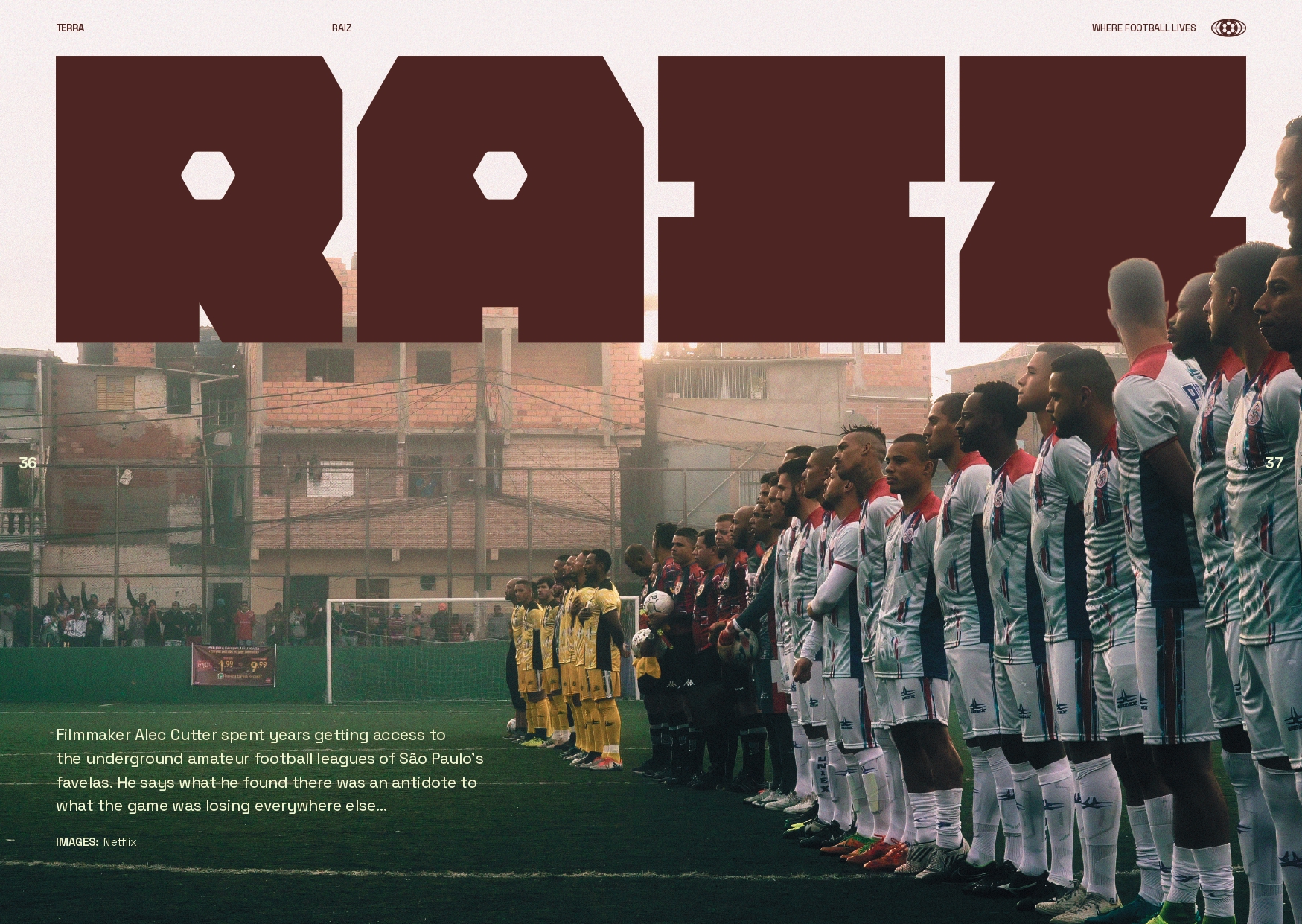
You cannot just walk into Super Copa Pioneer — the most prestigious underground football tournament in Brazil — and start pointing a camera at people. But for American filmmaker Alec Cutter — who grew up obsessed with Brazilian football and has spent the last decade documenting its culture — earning that access was the whole point.
His new Netflix documentary series, The Root of the Game, follows four teams through the várzea: the favela leagues that have quietly produced 90% of Brazil's professional footballers and operate entirely outside the professional game's orbit. Staged on the outskirts of São Paulo, the amateur competition is where legacies and livelihoods are on the line…
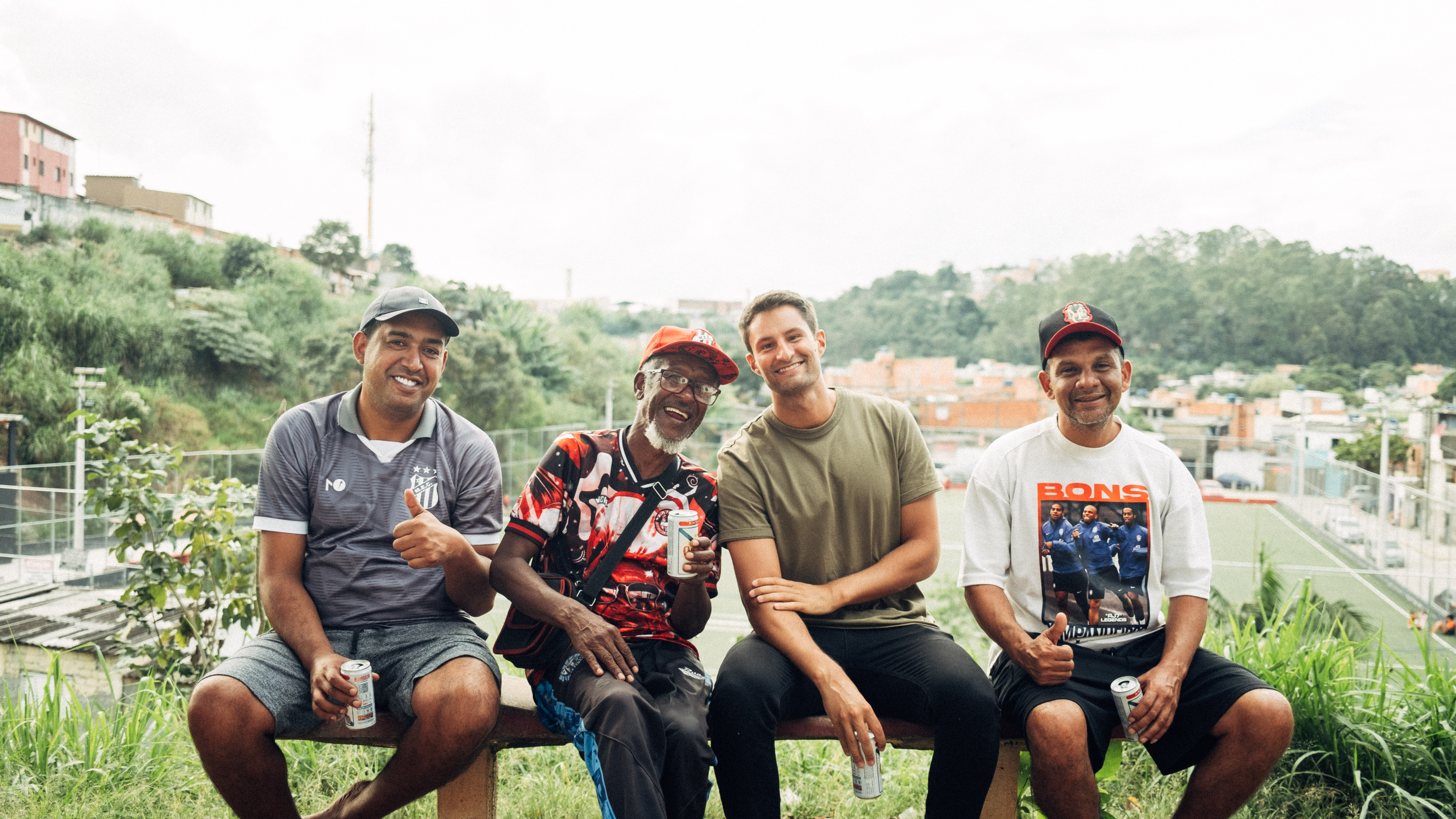
YOU'RE AN AMERICAN GUY MAKING A DOCUMENTARY SERIES ABOUT NEIGHBOURHOOD FOOTBALL LEAGUES THAT EVEN MOST BRAZILIANS HAVE NEVER SEEN ON TELEVISION. HOW DOES THAT HAPPEN?
By the time a friend took me to a várzea game in 2017, I'd been around a while — I’d had a trial to play for Fluminense and had been living here since 2014 — but I'd never seen anything like it. Maybe you see it on a video game, like FIFA Street, and you think you know what it is… And then you're actually standing in it and I felt like I was watching something that was being lost everywhere else. The exclusion, the rising ticket prices, kids who can't get in the door… I knew that was a story I wanted to tell. But I heard something once that stuck with me: Instead of showing how bad it is, show how beautiful it can be. That's what this is to me.

PAINT THE PICTURE FOR US: WHAT DOES A VÁRZEA COMMUNITY ACTUALLY LOOK LIKE?
So, every club has a headquarters — a proper community meeting spot that is marked on the map and known. Three of the four teams we follow even have their own field. And that image is like a symbol for everything to me: a field surrounded by houses, prime real estate where space is at a premium, and yet… this stays sacred. That's the spot that unites it all. They have youth programmes, they do churrasco together — big BBQs that become a whole culture unto themselves. And each team has an ambassador, like a godfather figure, who walks down the street and everyone comes out to hear when the next game is. The head of the fan group for one of the teams says in the first episode: I don't even watch professional football anymore. You guys are everything to us.

THERE'S A HYPERLOCALITY TO VÁRZEA THAT PROFESSIONAL FOOTBALL ONCE REPRESENTED BUT NOW FEELS LIKE A QUAINT RELIC.
The literal name of your neighbourhood is being represented the entire time. You'll see these people at the bakery tomorrow. The players talk about the pressure of that — if you mess up, they'll come find you. But that pressure is the other side of something really powerful: everyone has skin in the game. This is not a team you support from a distance. This is your team for your street and your people.

WHAT'S AT RISK IF THESE GAMES WERE TO SUDDENLY STOP?
These players get paid maybe $40 a game. If they don't have a game next week, they don't get paid. This is their job. There's a comparison we make in the series: a millionaire professional loses a game, they go home and they’re fine. These guys, if they lose — then what? They play for the food on their plate. That's a very real thing.

SO WHEN EXTREME WEATHER HITS — FLOODING, HEAT — IT'S NOT JUST AN INCONVENIENCE.
The extreme weather hits harder in these areas than anywhere else in the city. The infrastructure just isn't there — turf on top of cement, no drainage. The pitch turns into a little lake. Last year in Rio was the rainiest in recorded history. How much these spaces mean to the community, and how precarious they are — those two things are completely linked. If the game gets called off, you're not just losing a match. You're losing incomes, livelihoods. You're losing the thing that holds the week together.

YOU WERE WORKING WITH A TINY CREW IN COMMUNITIES THAT DON'T ROLL OUT THE WELCOME MAT FOR CAMERAS. WHAT WAS THAT LIKE?
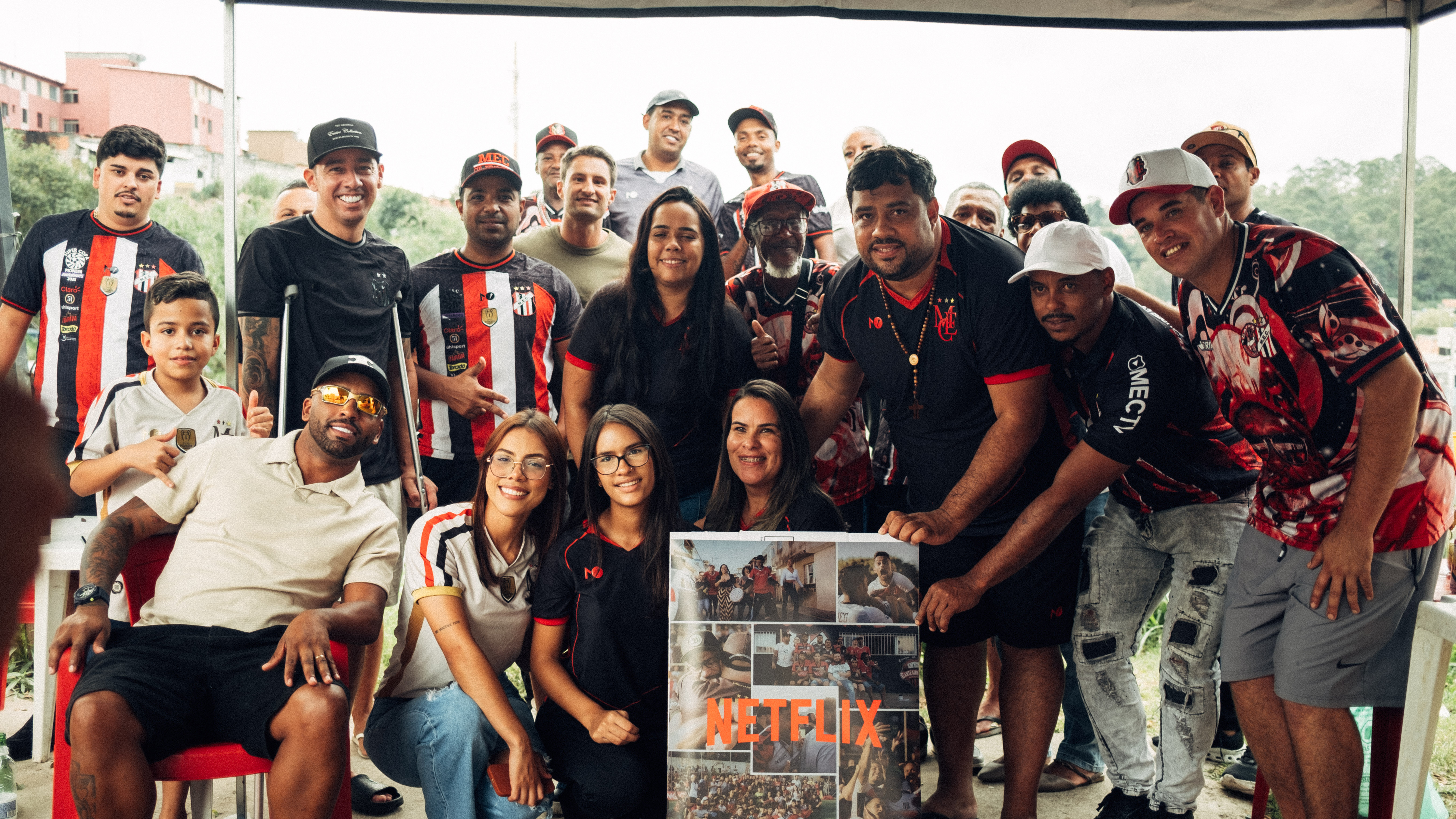
A lot of times it was just me and a sound guy. And actually the small crew helped — it created intimacy. By the end, people said they'd only sign their release forms if it came through me directly. I had to go to some of their houses just to get a signature. You don't just walk in and start filming. You earn trust. And I always had someone from the community with me. We let people know if we flew a drone — if we didn’t they might get shot down. You can’t ever forget that you're a guest in their space. When it's all done, you should see the messages I've gotten... They're just so proud to have been able to represent.
WHAT DO YOU WANT PEOPLE WATCHING FROM THOUSANDS OF MILES AWAY TO TAKE FROM IT?
I don't want us to forget what this sport means at its root. That’s the word they use constantly: raiz — roots. They say it fifty times in the series. This is the roots. This is what we are. And if you’re watching, maybe you only focus on the top five percent. But when that shrinks — and it will — everything above it shrinks too. The cream exists because of everything underneath. I’ll be honest, nobody was asking me to make this series. But if we're not actively contributing to protecting the soul of this game, are we just waiting for other people to do it? If you care for this thing, you're going to have to get your hands dirty.
The Root of the Game is available to watch on Netflix
Words: Sam Diss
Images: Netflix


CUI – Count Us In Limited está registrada en Inglaterra con el número de compañía 13199784, y opera como Count Us In bajo el número de organización benéfica 1195686.