
TERRA magazine: The Girls Had Their Hands Up
The question "what do you want to be when you grow up" has been haunting young people for ages. As a small child, hearing this question felt like looking into a movie about your life with a hundred different cutaways. But as the years move and the limbs extend and your responsibilities start to stack, this curiosity becomes an existential threat. Having your name up in lights feels out of reach. We begin leaning towards the mundane.
At least, that is what I thought people felt. When I met the Moroccan girls of youth football club Amiad Al Hkalil Arryadia, they proved to me that with the right support system, obtaining your dreams doesn't have to feel like catching lightning in a bottle.
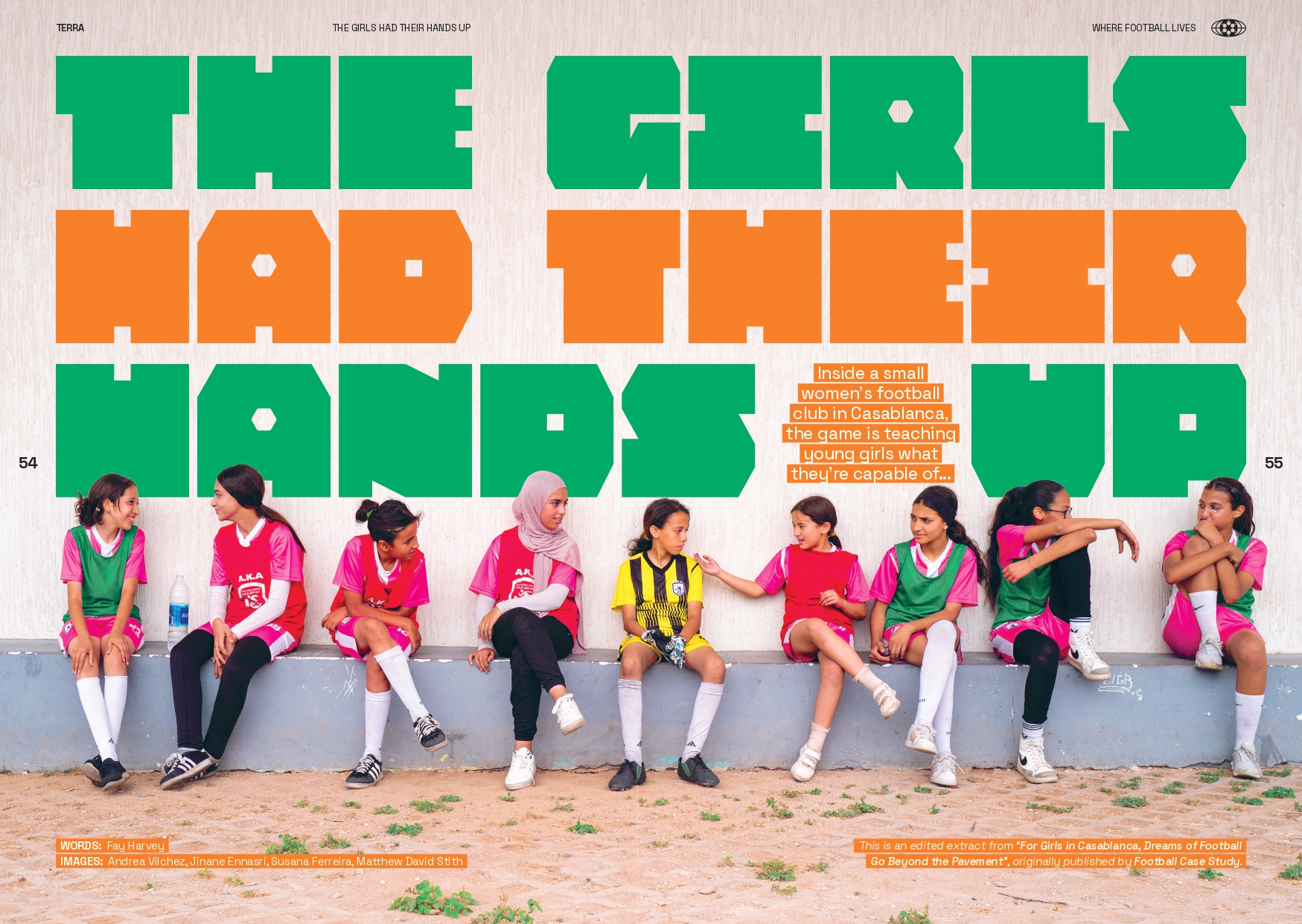
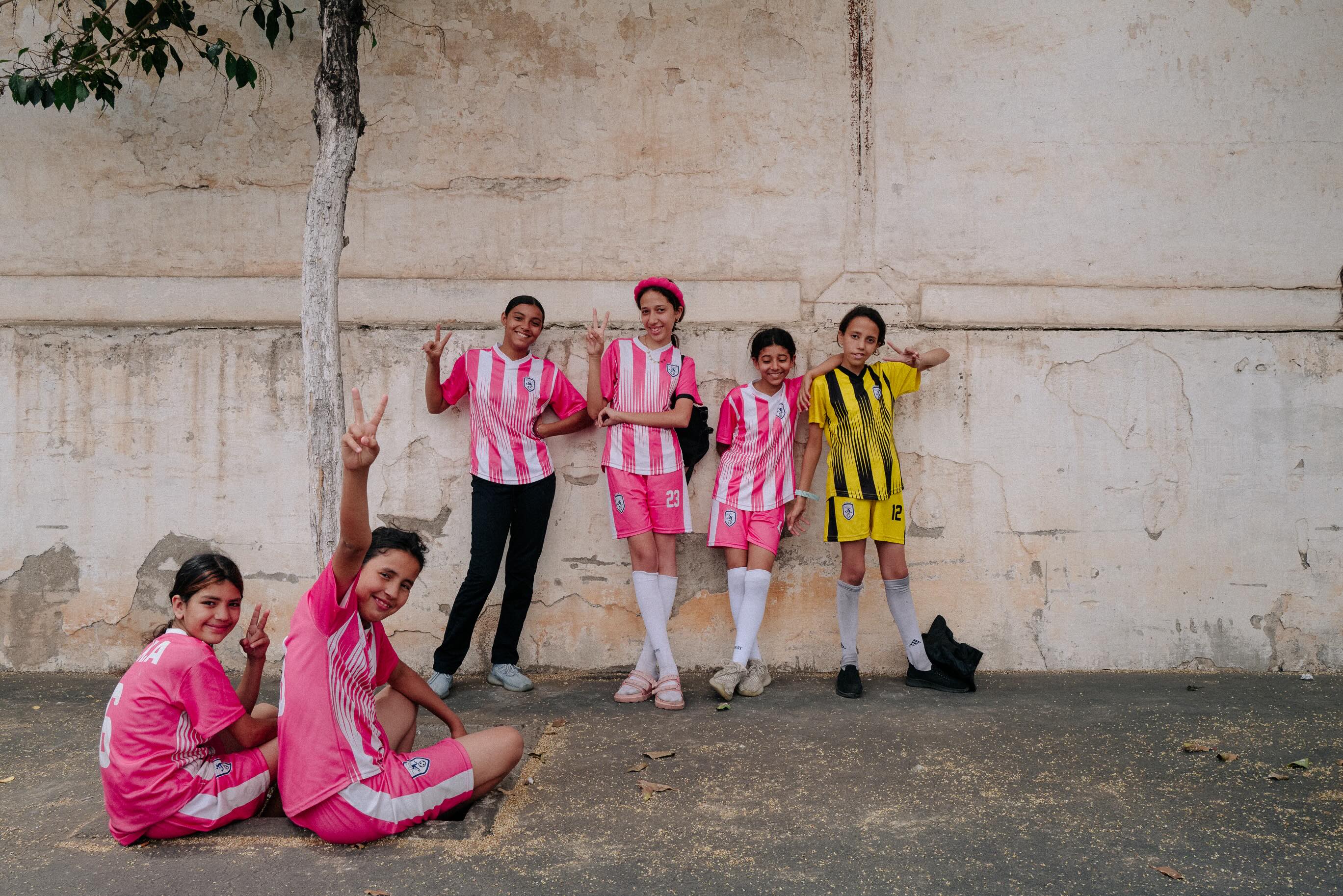
We met the team by chance, passing their practice field on the way to a WAFCON match. In the corner of our eye, colourful figures leaning against a classically coloured beige Casablanca wall jumped out at us — girls in pink and white football kits stood alongside a coach in a navy blue tracksuit. The group looked as though they had been painted on the wall and had been a part of the city since forever.
Within Casablanca, football-related things — players, jerseys, footballs, graffiti, advertisements — are more prevalent in the streets than almost anything else. But one might notice that young female players engaging in street football, though not completely absent, tend to be a rarity. This is precisely why we asked our driver to pull over.
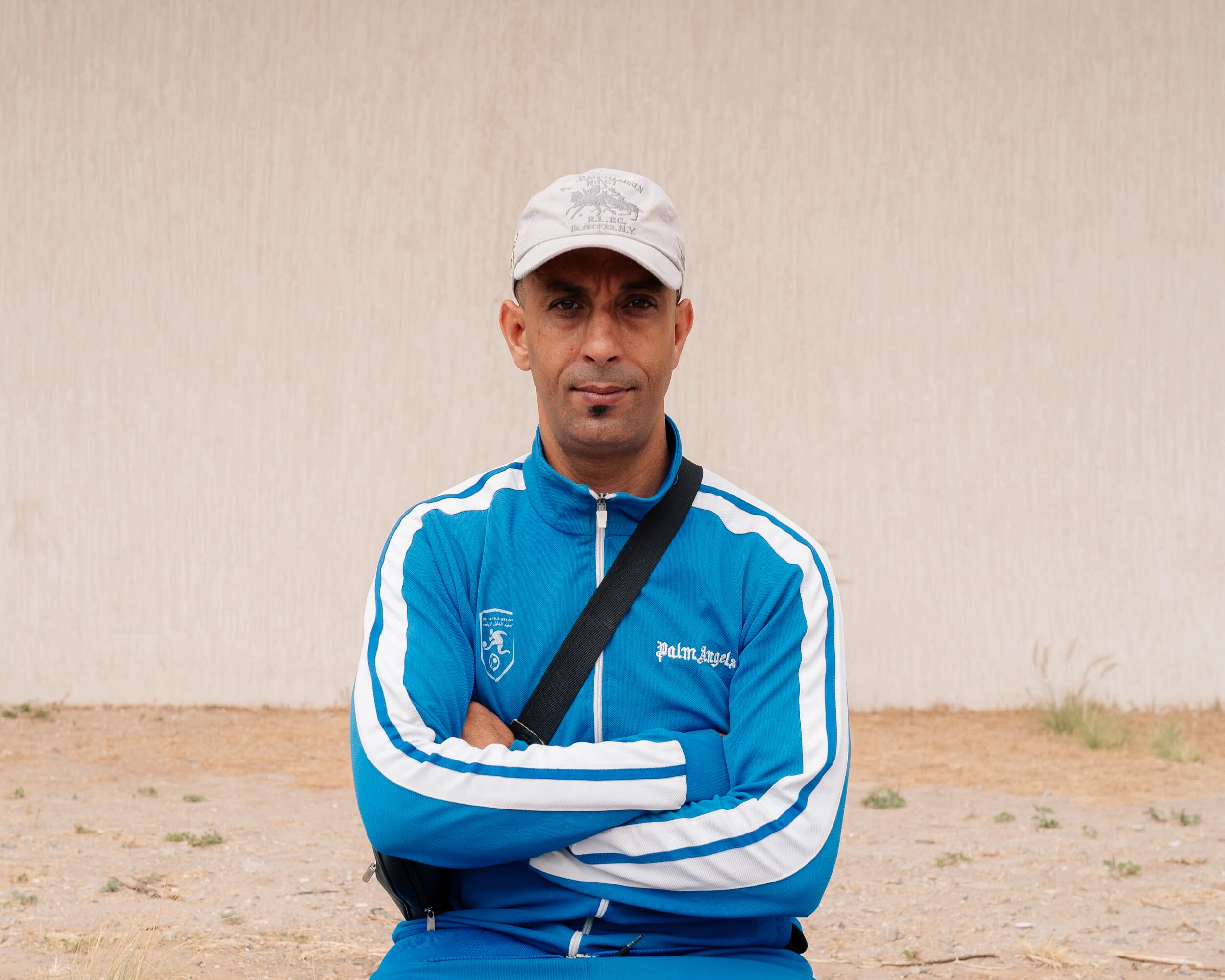
Benchkir Abdrrahim, the man standing beside the girls, happily greeted us. He is not only the team's coach but the president of the club, which he formed in 2019 after noticing his son and daughter developing a deep love for football, building it step by step in his hometown out of his own pocket and the donations of parents. He invited us to return for a training session.
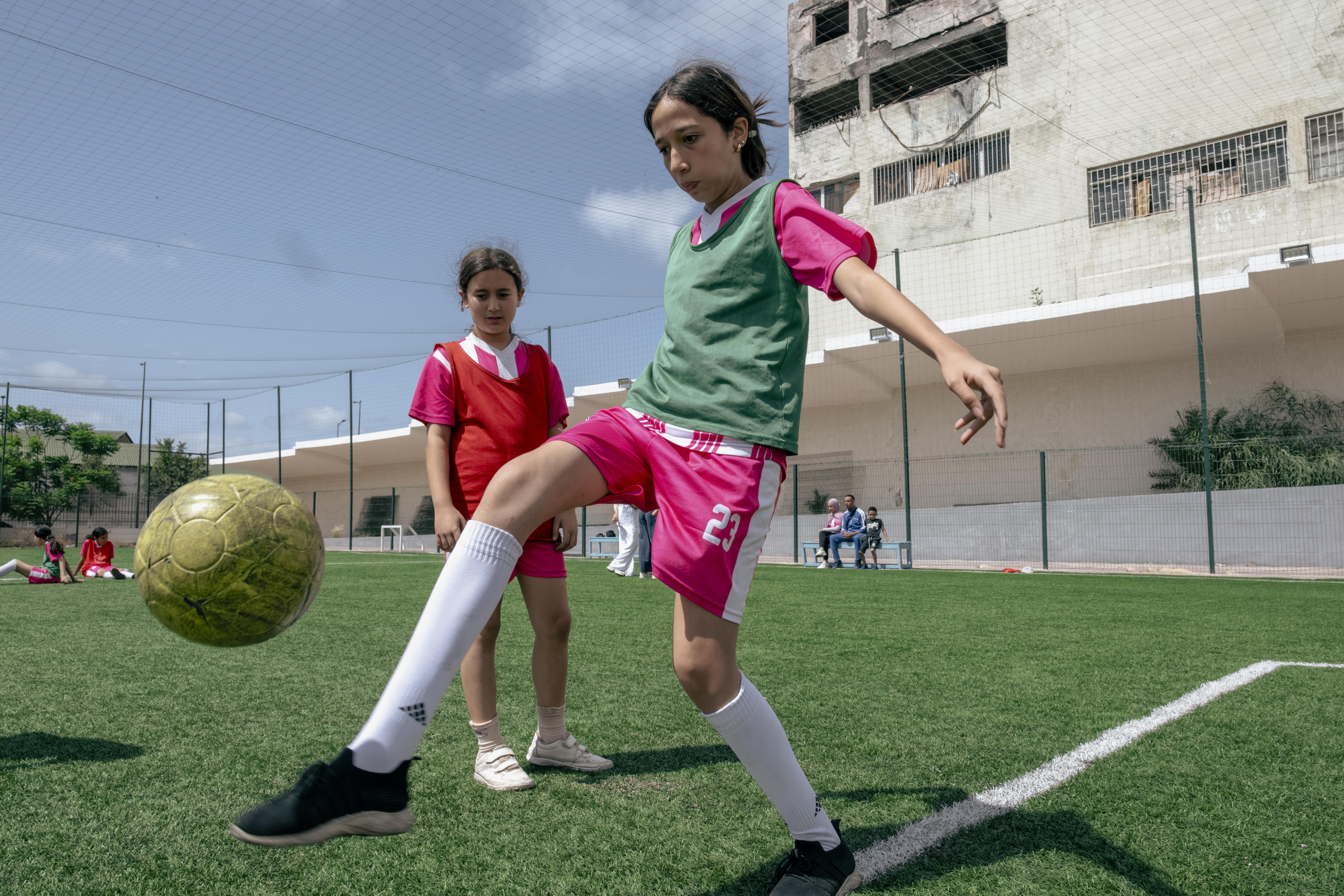
Sitting in a circle formation on the turf one week later, the girls humoured me as I asked them questions unrelated to football. Shy but very polite, they fiddled with their hands and didn't hold eye contact for long — until the age old question came.
Expecting the girls to hesitate, I took a second to look down at my notes. When my head bobbed back up, I was surprised to see many of the girls had their hands up, ready to answer in an instant. Ahlam, the 14-year-old captain who fell in love with football through her father, said she hopes to be an ambassador. Others mentioned dreams of becoming a doctor. But the dream of being a professional footballer was primary and, most importantly, possible. In the same future-telling fashion, the girls assured me that, within ten years, their club will be as grand as Real Madrid and Barcelona — and they want everyone included. Even boys.
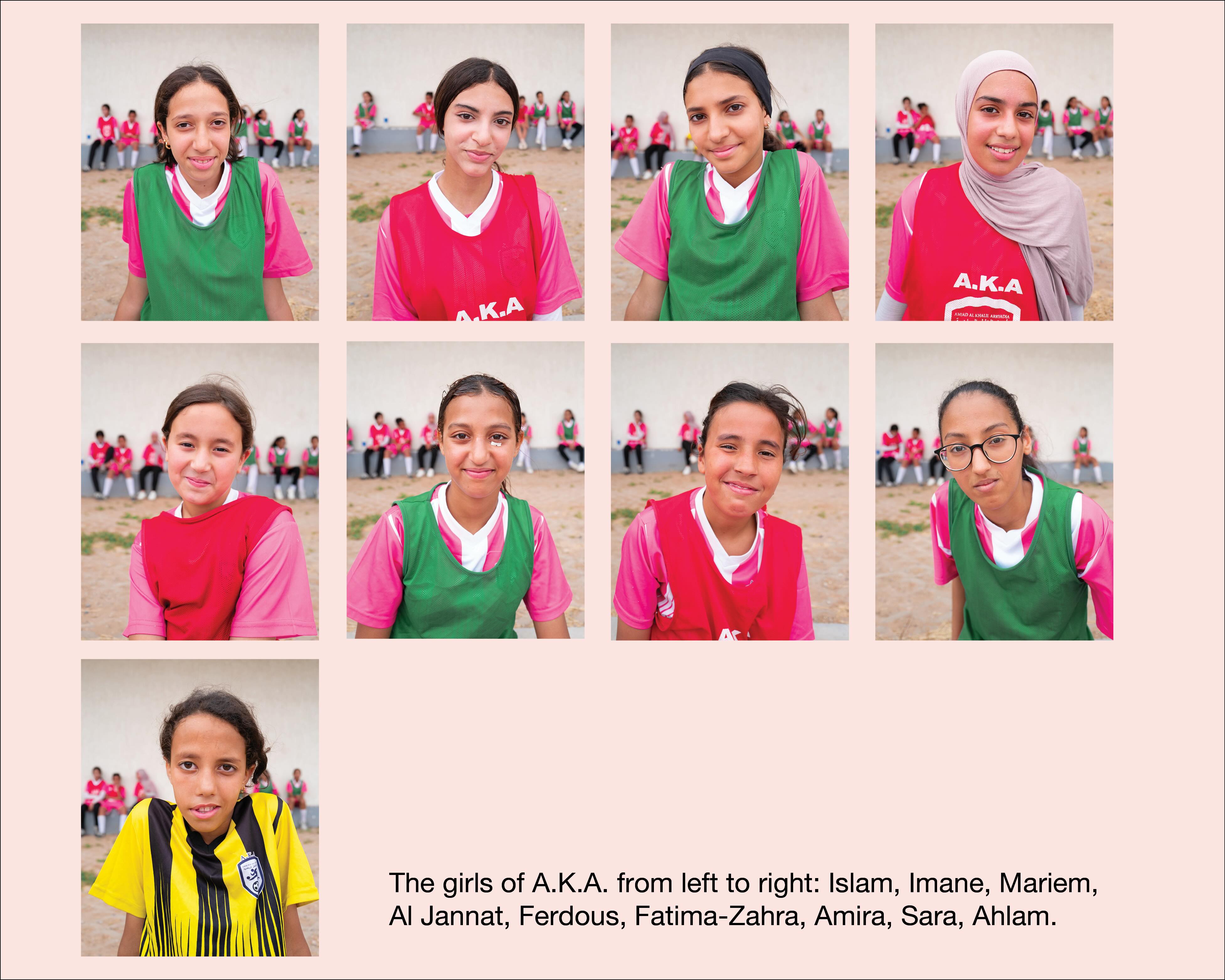
It was football that brought the girls not only confidence, but certainty. Up until that point the conversation had felt like ticking off boxes with a nurse in a waiting room. But once football became the topic, it was direct answers, eye contact, and an eagerness to share their personal connection to the field.
As he sat on a bench from afar, Benchkir looked at his team with an aura of quiet pride. "I feel like a father figure to them when we are at the field," he said, "and the least I can do is make my team feel independent, well-rounded and, above all, strong."
A handful of the girls agreed that when they first began enjoying football, their mothers had little idea about their routines. Now their mothers ask questions about practice and prepare small gestures devoted to their training — packing extra snacks, laying out their kit. As Ahlam put it, discussing football is a way to bridge the gap between the pitch and home.
Two weeks later, after a WAFCON match where Morocco beat DR Congo in Rabat, I walked out of the stadium into live music and a swarm of people gathered to dance. A group of Norwegian girls we'd met before the match — in Morocco to support the Atlas Lionesses for the first time — were in the middle of the mayhem, surrounded by Moroccan fans, bright smiles on their faces as they danced among strangers that had turned into family. On the edge of the pulsating circle, packs of girls from youth football clubs across Morocco danced with one another, mirroring each other's two steps the way they connected passes and covered each other's backs on the pitch.
The scenes reminded me of something Hicham, a Moroccan father who'd watched the whole country change around this sport, had said before kickoff: "This tournament shows that women can succeed in football the same way men can. There are no limits."
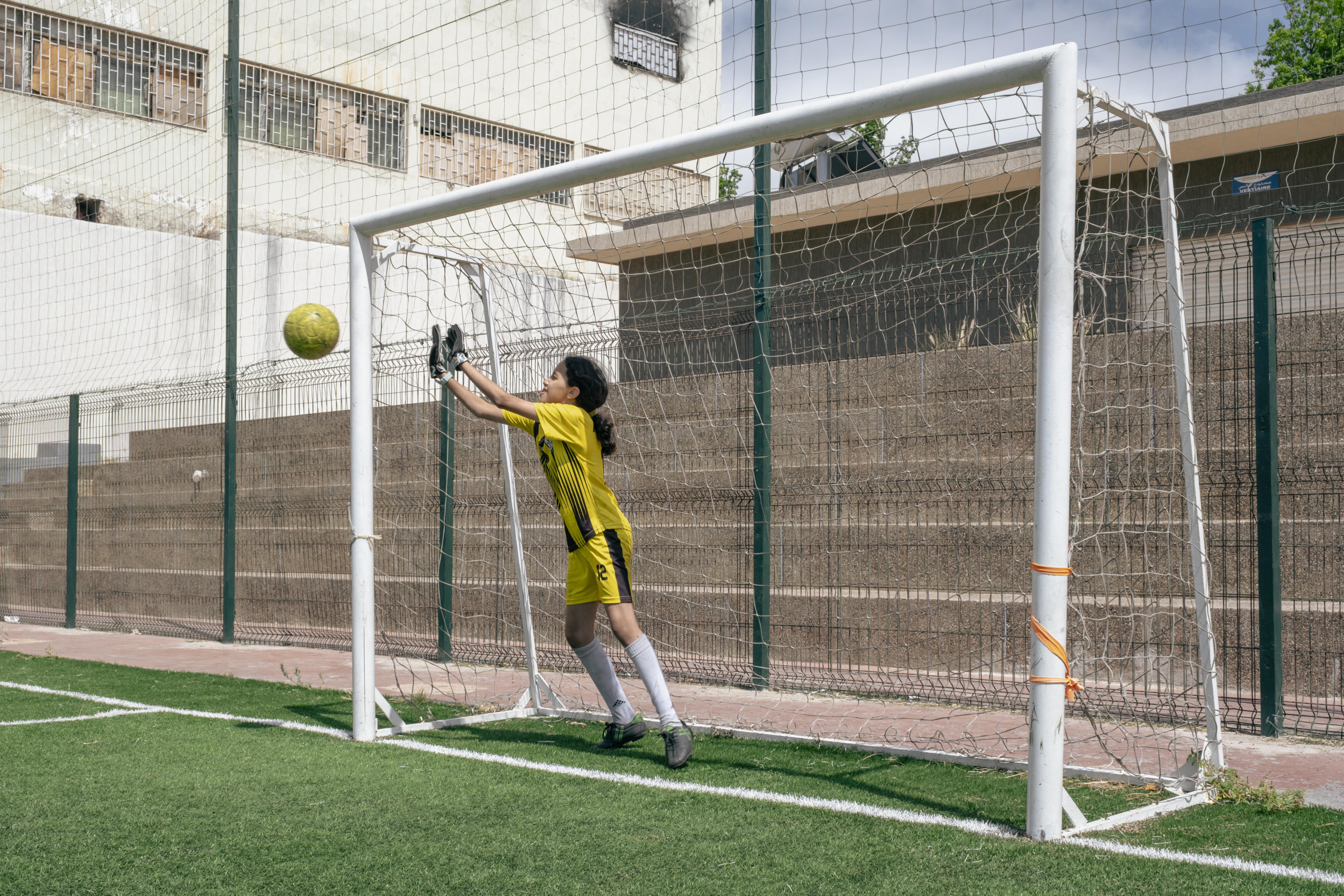
When I asked Benchkir where he sees the future of women's football in Morocco, his perpetually pensive expression morphed into certainty. He said he hopes for two things: For football to be second nature to girls, and for the taboo that women cannot play football to vanish entirely.
This is an edited extract from “For Girls in Casablanca, Dreams of Football Go Beyond the Pavement”, originally published by Football Case Study.
Words: Fay Harvey. Images: Andrea Vílchez, Jinane Ennasri, Susana Ferreira, Matthew David Stith.


CUI – Count Us In Limited está registrada na Inglaterra sob o número de empresa 13199784 e opera como Count Us In sob o número de instituição de caridade 1195686.