
TERRA magazine: The pitch is the point

Dr Jack Layton spent a year of his life getting up early on Sunday mornings to watch men play football quite badly. What he was watching, he argues, was not about the quality (or lack thereof) but about one of the last places in modern life where community actually works — not as a policy objective or an ideal outcome in a well-meaning strategy document, but as a genuine, durable, muddy, messy fact of life.
Layton studies what he calls “social infrastructure”: the unglamorous physical fabric — bobbly pitches, dank changing rooms, the holy tincture of a post-match drink — that makes it possible for people to continue showing up for each other even during trying times.
And after a year of observation at the iconic Hackney Marshes, his conclusion was simple and, in the current climate, quietly alarming: When that infrastructure is threatened — when games are cancelled and those tenuous bonds break — its effects can be felt far away from the fields of play...
YOUR RESEARCH IS ROOTED IN THE IDEA THAT AMATEUR FOOTBALL IS “SOCIAL INFRASTRUCTURE.” FOR THOSE OF US WITHOUT FANCY LETTERS AFTER OUR NAMES... WHAT DOES THAT ACTUALLY MEAN? AND WHY SHOULD ANYONE CARE?
Boiling it down, I think it’s that everyone needs something to do, somewhere to go, and somebody to do it with. The structure of a football league provides all three at once. It creates something for people to do. There’s a place to go and do it. And you have a built-in team structure — people to do it with. The abstract language that academics reach for — community, kinship, infrastructure — doesn’t land with people in the same way. But if you talk about going to play football with someone, joining in, turning up — it makes those connections feel real and tangible.
And there are three big things it does. The mental health and wellbeing benefits are demonstrable: physical activity and social connection both improve it. Then there’s what you might crudely call social capital — the people you turn to in times of stress, the ones who make day-to-day life easier, who you can call on in a crisis. And then there’s something that I think gets overlooked because it doesn’t sound serious enough: it’s fun. Fun and nice things are what makes living in cities and towns worthwhile. Those aren’t trivial.
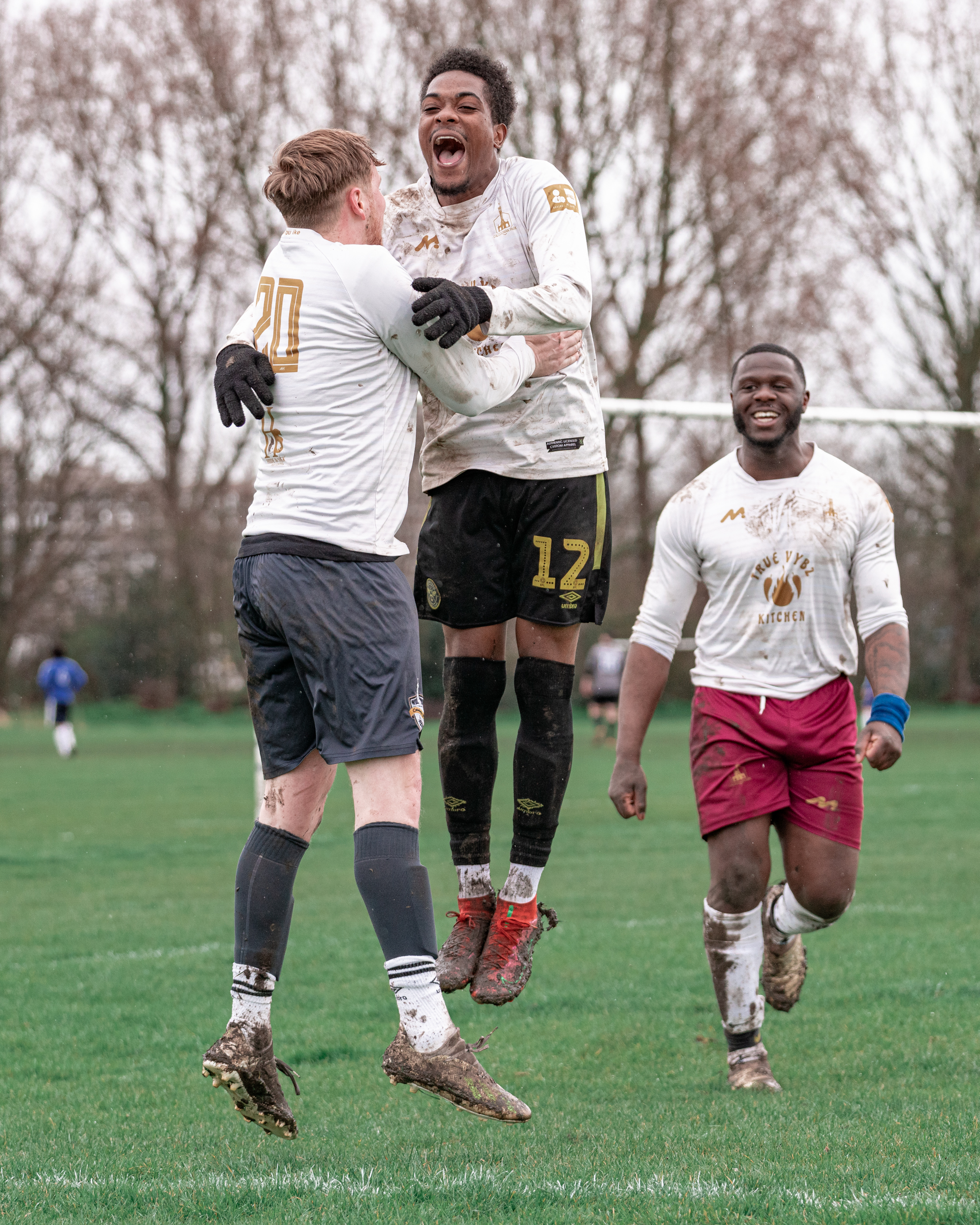
When the ball goes in — the eruption of shared joy is, I think, one of the most available forms of collective experience that ordinary life offers.
YOU SPENT A FULL SEASON WITH YOUR SUNDAY TEAM — STRATTON RANGERS — AT HACKNEY MARSHES IN EAST LONDON, AND DESCRIBED BEING SURPRISED NOT BY HOW JOYFUL IT WAS, BUT BY HOW DURABLE IT WAS. EVEN WHEN RESULTS WERE MISERABLE, WHAT WAS IT ABOUT THE TEAM THAT KEPT THEM TOGETHER THROUGH A MISERABLE RUN OF RESULTS?
That was the real revelation for me. I went in expecting to observe community being made through good times — and there were good times, brilliant ones. But the season I followed was genuinely awful. Losing week in, week out, feuds, tensions within the squad. And rather than asking “Isn’t this an amazing thing?” I found myself asking, “How on earth is this thing still happening?” Any rational person would have walked away. But they didn’t.
The psychologist Robin Dunbar has done recent work specifically on male friendship that speaks to this.1 His argument is that for men, communication and conversation aren’t necessarily the central things holding relationships together. It’s the act of doing. Physically doing something alongside another person — a drill, a sprint, a last-ditch tackle — creates a social glue that talking doesn’t quite replicate.
It’s why the team kept coming back. Not for abstract reasons. But because the doing held them.
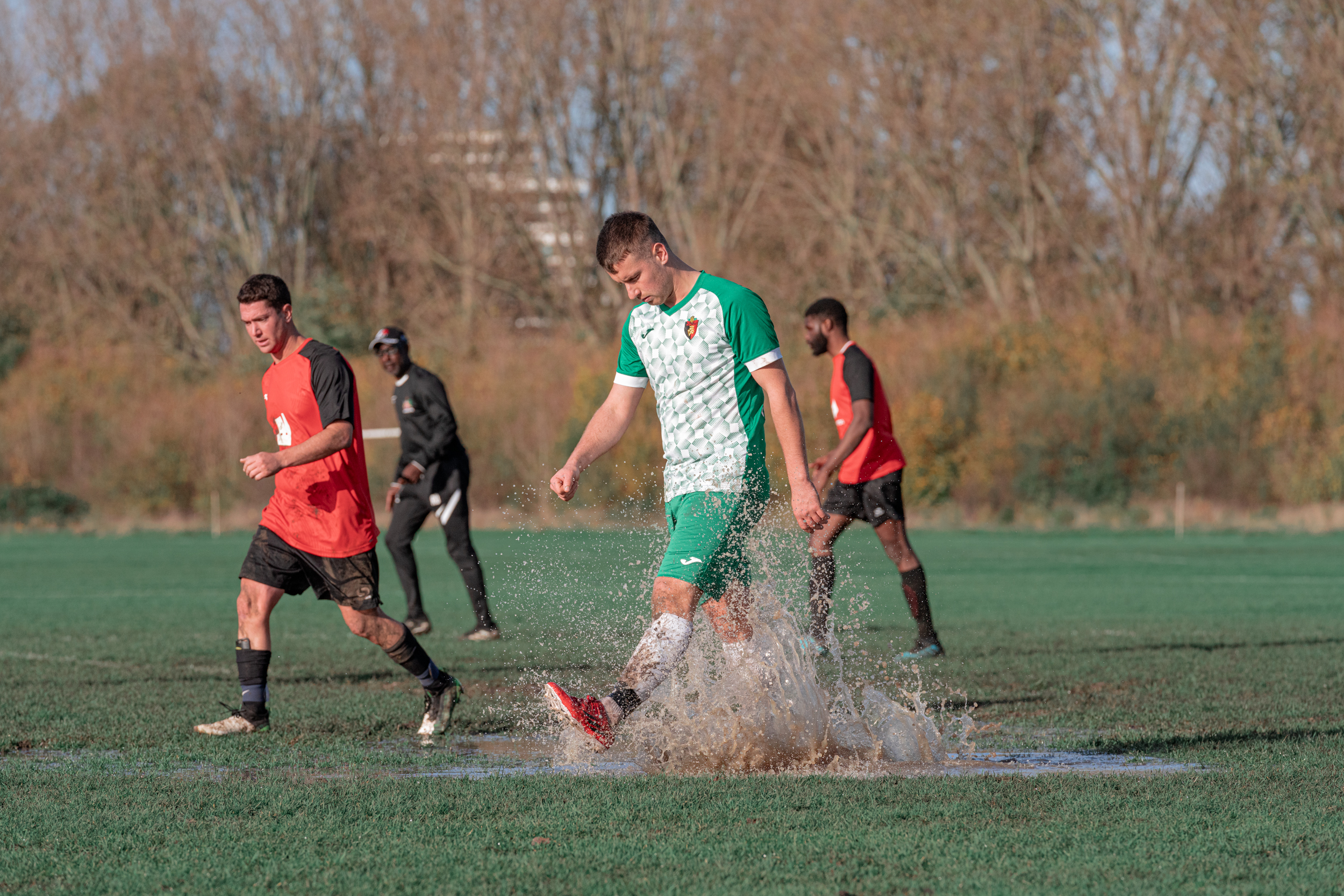
Physically doing something alongside another person — a drill, a sprint, a last-ditch tackle — creates a social glue that talking doesn’t quite replicate.
IN YOUR WORK, YOU WRITE THAT THERE’S A DIFFERENCE BETWEEN DOING SOMETHING ALONGSIDE PEOPLE AND DOING SOMETHING WITH PEOPLE. TELL US ABOUT THAT.
Yes, and it’s an important distinction. When I was doing research in parks — watching swimming communities at London Fields, people running in Finsbury Park — you get something real there too. ‘The runners’ nod' is genuinely a form of solidarity. But it’s qualitatively different from what happens in a team sport, where you are relying on a teammate to cover your back, to make the run, to win the header. That mutual reliance creates something more durable and more binding.
There’s also a historian called William McNeill who studied military history and argued that the sense of brotherhood in armed forces develops significantly through drill marching — through physically moving your body in the same rhythm as someone else. Something about that shared physical action creates bonds that verbal communication doesn’t. Playing football together captures something of this. You’re co-ordinating, anticipating, trusting.
And when it works — when the ball goes in — the eruption of shared joy is, I think, one of the most available forms of collective experience that ordinary life offers.
.jpg)
If you talk about going to play football with someone, joining in, turning up — it makes those connections feel real and tangible
THE TEAM YOU STUDIED WAS ETHNICALLY AND SOCIO-ECONOMICALLY DIVERSE IN A WAY THAT DOESN’T OFTEN HAPPEN ORGANICALLY. HOW DOES FOOTBALL CREATE THAT UNIQUE MIX WHEN MOST INSTITUTIONS FAIL TO?
The Marshes have always had this reputation — the melting pot — and Stratton ‘For men, communication and conversation aren’t... Rangers reflected it. Around 55% of the squad identified as coming from Black, Asian and minority ethnic backgrounds, 45% as white. Socio-economic backgrounds were spread evenly across the range. And the reason football achieves this when community strategies often don’t is precisely because nobody is being asked to show up in the name of integration. They’re being asked to show up in the name of football.
Age is another one. There aren’t many situations in modern life where you routinely socialise in depth with people of a significantly different age. Policy makers are genuinely agonised about how to create intergenerational encounters. Football already does it.
You need the fast young lads on the wing and the experienced heads at the back. The structure of the game makes that diversity functional.
.jpg)
Playing football together ...You’re co-ordinating, anticipating, trusting.
I’VE SEEN THIS SOMETIMES CALLED THE “WET WEDNESDAY NIGHT TEST.” WHAT IS THAT?
Well, for me, the real test of whether social infrastructure works is whether your investment gets fourteen people to turn up to football — or cub scouts, or a book group — on a wet Wednesday in February. Nobody comes to “build social capital.” They come because the pitch is available, the lights work, and there are (occasionally) hot showers. The drink afterwards does more for integration and social capital than any strategy document ever will. ...necessarily the central things holding relationships together.’ That’s the thing that policy often misses. You don’t need to programme “community”. You need to provide the conditions for it. Good facilities, affordable access, reliable maintenance. And then get out of the way.
WHEN INFRASTRUCTURE BREAKS DOWN OR BECOMES INACCESSIBLE — THROUGH COST, DISREPAIR, OR CLIMATE DISRUPTION — WHAT HAPPENS TO THE COMMUNITY THAT FORMS AROUND IT?
We had a micro test case during COVID. When access to these spaces vanished overnight, what became acute very quickly was not just the loss of the exercise or the game — it was the loss of the social touchpoint. And for the kind of team I was studying, some of those relationships would simply weaken and dissolve. There are players who, I’m confident, would not still be in contact if they weren’t playing football together. Football isn’t incidental to the friendship. In many cases, it is the friendship.
Climate disruption raises the same question through a slower, grinding version of the same process. Seasons getting disrupted by rain, heat, drought. The quality of pitches declining. The cost of everything — fuel to get there, kit, weekly subs — all going up. These things chip away at participation, and they don’t chip away equally. The people who drop out first when things get harder are those with the least margin: those for whom the commute is already a stretch, for whom the cost is already tight. So what looks like a conversation about green spaces and drainage is also a conversation about whose community gets maintained and whose gets quietly eroded.
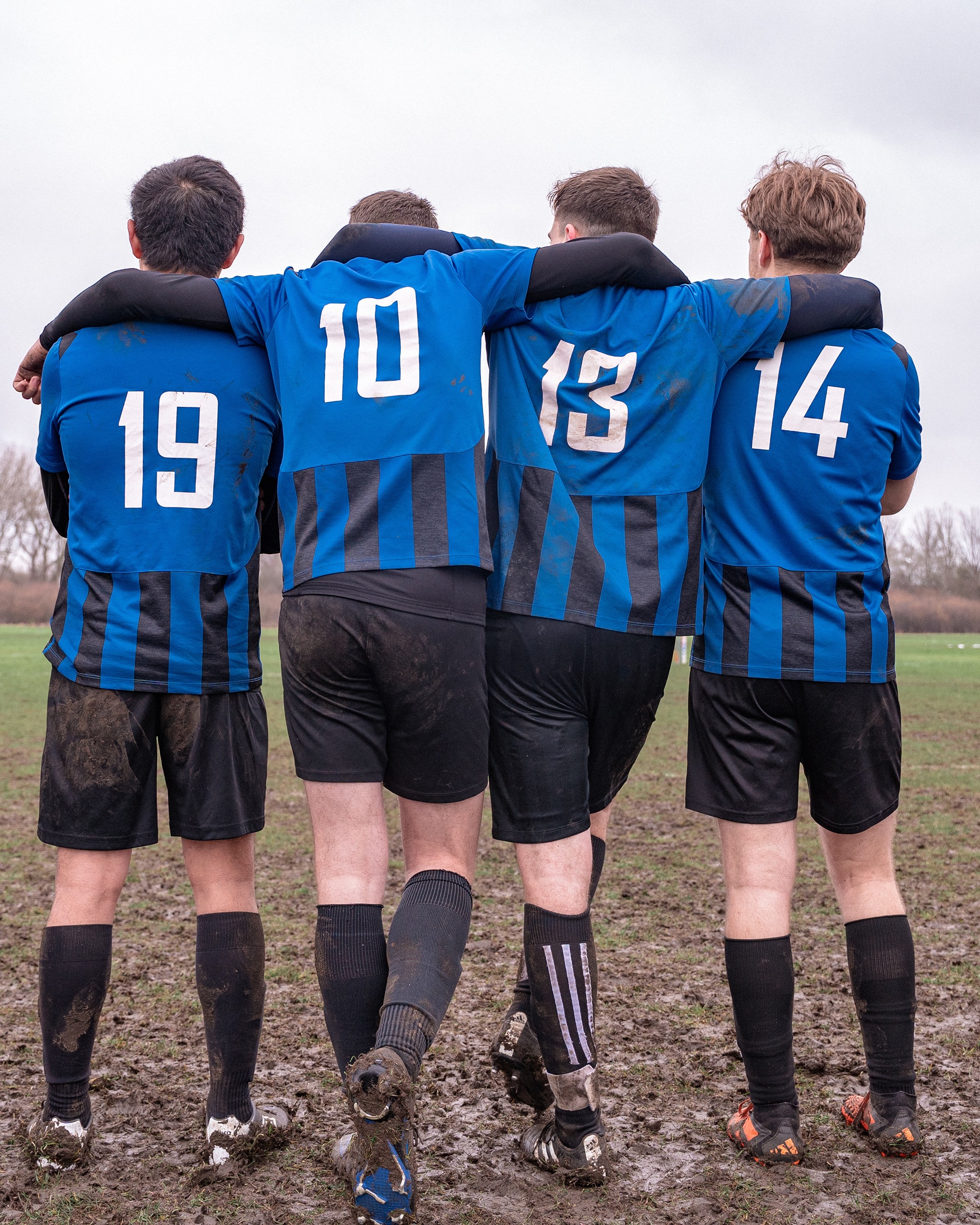
A conversation about green spaces and drainage is also a conversation about whose community gets maintained and whose gets quietly eroded.
DO YOU FEEL LIKE THERE’S A TENDENCY TO UNDERVALUE SPORT IN POLICY CIRCLES? YOU KNOW, TO SEE IT AS ‘RECREATION’ RATHER THAN ‘INFRASTRUCTURE’.
Definitely. Partly it’s a nerds-versus-jocks thing that goes all the way back to PE at school. I’ve presented this work in academic settings and watched people who spent their formative years having a genuinely terrible time in sport become visibly resistant to the idea that it matters. And then there’s a class dimension, as well: the communities that policy makers imagine when they think about community engagement tend to be slightly older, tend to skew female, tend to fit a certain image of what “community” looks like. The men turning up to play amateur football on a Sunday morning are often assumed to be fine — to not count as the community that needs supporting. That’s a serious gap in how we think about urban life.
You wouldn’t, for instance, find a local council holding a community consultation at Hackney Marshes, even though hundreds of people gather there every week forming real, durable, meaningful relationships. The community is visible and present. It just doesn’t look like what institutional imagination expects a community to look like.
.jpg)
You don’t need to programme “community”. You need to provide the conditions for it.
WHAT WOULD YOU SAY TO FOOTBALL CLUBS — AT ANY LEVEL, FROM SUNDAY LEAGUE TO THE CHAMPIONS LEAGUE — ABOUT THEIR RESPONSIBILITY TO THE GRASSROOTS ECOSYSTEM BENEATH THEM?
Football clubs are in a uniquely privileged position. They are relatively wealthy stakeholders anchored in their places in a way that, unlike in the American franchise model, they can’t easily escape. A club is in a place. The place gets behind the club. That relationship carries real responsibility.
I think the most useful frame is the idea of a civic mission — the same argument that’s been made about universities over the last decade or so. The question is: what are the assets you have access to, how can they support local communities, and what are the relatively small investments and gestures of engagement that would make a significant difference? Good quality green spaces in surrounding communities, accessible training facilities, support for grassroots leagues — these things matter not just to football but to the texture of urban life. A pitch that’s well-lit, well-drained, affordable and open is not a luxury. It’s infrastructure. And infrastructure is what makes community possible.
Words: Sam Diss
Images: Paul Gilbey
1 Dunbar is the famed Oxford evolutionary psychologist who worked out that humans can comfortably maintain around 150 stable relationships — roughly the number of people you wouldn't feel weird joining uninvited for a drink if you bumped into them. The number is contested, but the underlying idea — that our social capacity has hard limits, and that how we spend it matters — still rings true.


CUI – Count Us In Limited is registered in England under company number 13199784, and operates as Count Us In under charity number 1195686.